



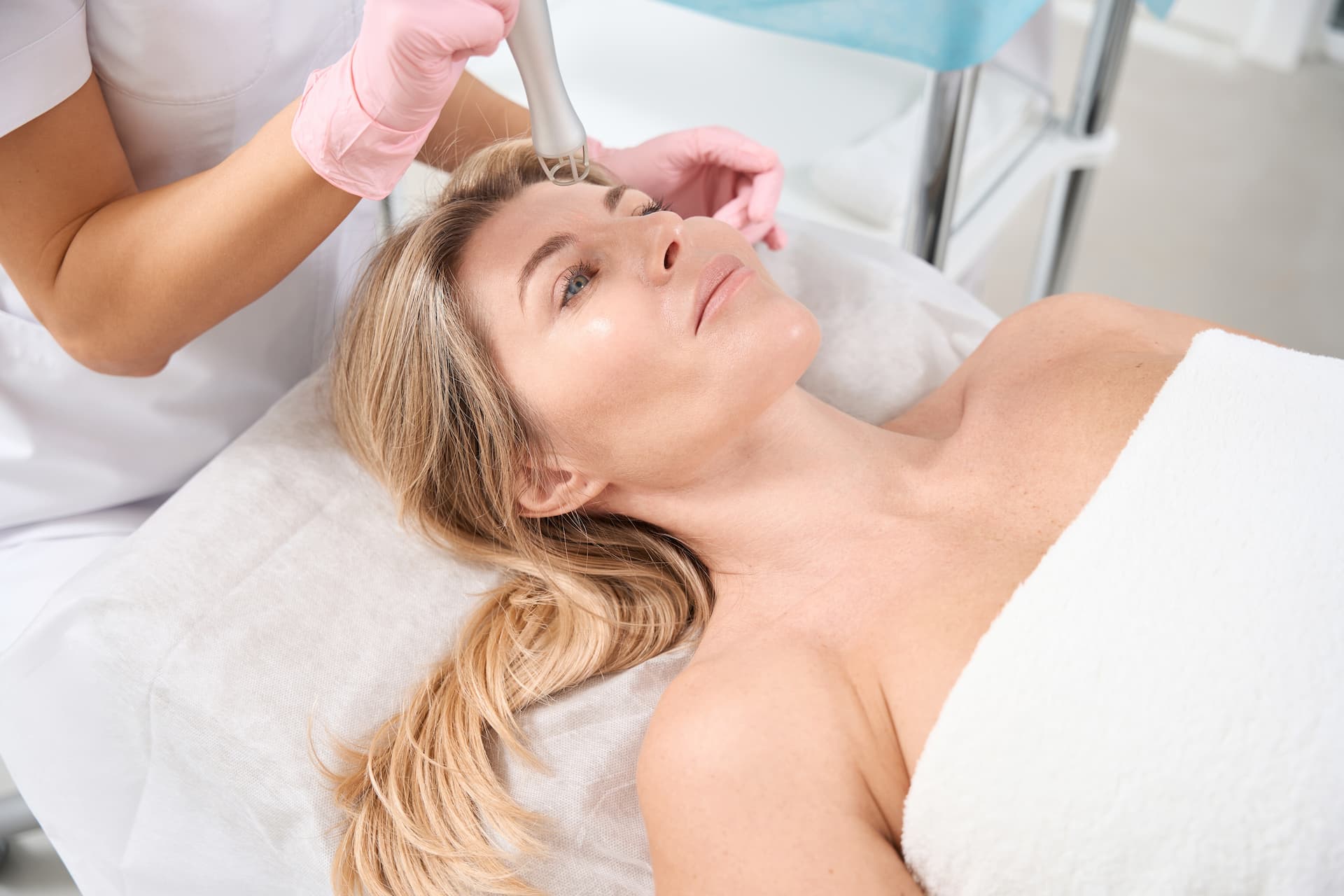
10 Apr Fraxel Laser: The Sydney Skin Treatment Autumn Was Made For
There’s a moment many of our clients describe: they’ve tried the serums, kept up with SPF, maybe even had a few treatments, and the thing they set out to fix is still there. Staring back at them every morning. Acne scarring that softens but never fully disappears. Uneven tone that no amount of foundation quite covers. Texture that feels permanently off.
Fraxel laser is often what changes that conversation. It’s one of the most established skin resurfacing technologies available at cosmetic clinics in Sydney, and it gets talked about for good reason.
How Fraxel Works
Fraxel is a fractional laser, which means it treats the skin in thousands of tiny, precise columns rather than across the entire surface at once. Each column of energy creates a controlled zone of thermal activity that reaches into the deeper layers of the skin. The healthy skin surrounding those zones is left intact, which is what supports faster healing compared to older, fully ablative resurfacing lasers.
The result of all this microscopic activity is that the skin’s natural repair processes kick in; collagen production accelerates, cell turnover increases, and newer, healthier skin gradually replaces what was there before. It’s not instant, but over the long term, the results are anything but subtle. The changes build over weeks and months, which is exactly how meaningful skin improvement tends to work.
The Two Wavelengths and Why They Matter
Medical-grade Fraxel systems operate at two wavelengths, each targeting a different skin depth. Understanding the difference is useful because it explains why Fraxel is effective across such a range of concerns rather than being a one-trick treatment.
1550nm penetrates deeper into the dermis. It’s suited to concerns that live below the skin’s surface – acne scarring, textural irregularities, and areas where rebuilding collagen is the primary goal.
1927nm works closer to the surface. It’s well matched to pigmentation and uneven tone caused by sun exposure: age spots, sun damage, the kind of discolouration that develops over the years and doesn’t shift with skincare alone.
Both wavelengths can be used independently or in combination during a single session, depending on what your skin actually needs. This is a decision made in consultation, based on your skin assessment, not a one-size approach.
What Fraxel Can Help With
When clinically appropriate and based on individual assessment, Fraxel laser treatment may assist with:
Acne scarring – Rolling scars, boxcar scars, and the general textural unevenness that lingers long after breakouts have resolved
Sun damage and pigmentation – Flat brown spots, age spots, and the broader uneven tone that accumulates from years of UV exposure
Skin texture – Rough or uneven surface texture that skincare alone hasn’t shifted
Fine lines and early signs of skin ageing – Particularly where collagen stimulation is the goal
Overall skin quality – The kind of improvement that shows up as a more even, luminous complexion rather than one targeted fix
Outcomes vary between individuals and depend on skin type, the specific concerns being addressed, the number of sessions required, and how carefully aftercare is followed. A thorough consultation is required before any treatment proceeds.
Why Autumn Is the Right Time to Book
Post-treatment skin is temporarily more photosensitive. Sun exposure during the healing period can work directly against the outcome, in some cases triggering a rebound in pigmentation that leaves the skin darker than before. Staying out of the sun during recovery isn’t optional advice; it’s what determines how effective and safe the treatment can be.
Autumn removes the friction. Sydney’s UV index drops significantly through the cooler months. Daily exposure naturally decreases. The lifestyle shift that comes with the season – less time at the beach, fewer hours outdoors in the middle of the day – reduces the UV load in a way that’s genuinely hard to replicate in summer, even with excellent SPF habits.
Recovery is also easier to manage. The redness and peeling that follow treatment, typically settling within a week, are far less disruptive when you’re not navigating a beach holiday or a run of events. Winter gives you the quiet window this kind of treatment benefits from.
And if you start now, the skin renewal happening beneath the surface – collagen remodelling, progressive textural improvement – develops across the cooler months. By the time summer arrives, you’re not still waiting for results. You’re already there.
What to Expect at Your Appointment
A topical anaesthetic is applied before treatment to minimise discomfort, typically up to an hour beforehand. During the session, most people describe the sensation as warmth or mild prickling. The treatment itself takes 30 to 45 minutes, depending on the area being addressed, and your practitioner is present throughout to monitor your skin’s response.
In the days following treatment, redness and some swelling are normal, similar in feel to mild sunburn. This typically settles within 2 to 3 days. From around day 3, you may experience some flaking or peeling as the skin renews. The new pink skin underneath shows the process working as it should.
Most people are largely through the visible recovery phase within a week, though this varies with treatment intensity and individual skin response. Your practitioner will give you detailed aftercare instructions before you leave, including what to avoid and how to support your skin through the healing phase. SPF 50+ every single day during this period is non-negotiable.
Results are progressive. Collagen remodelling doesn’t happen overnight, and meaningful improvement typically builds over three to six months. Depending on the concern being treated, multiple sessions may be recommended.

Is Fraxel Right for Your Skin?
Not always, and not for everyone. Suitability depends on your skin type and how it responds to UV exposure, medical history, current skin condition, prior treatments, and a realistic assessment of what the concern actually needs. For some presentations, a different technology or a combination approach will produce better results than Fraxel alone.
At Zecca, we don’t assign treatments before we’ve properly assessed your skin. A consultation is where we look at what’s actually happening, what you want to achieve, and what approach makes the most clinical sense. Not what’s trending. Not what worked for someone else. What’s right for you.
Frequently Asked Questions
How many Fraxel sessions will I need?
It depends on what’s being treated and how your skin responds. Some concerns improve meaningfully after a single session; others, such as more pronounced acne scarring, typically require a series of treatments spaced several weeks apart. Your practitioner will outline a plan during your consultation based on your specific skin assessment.
Does Fraxel Laser hurt?
A topical anaesthetic is applied beforehand to minimise discomfort. Most people experience a warm or prickling sensation during treatment, which is generally well-tolerated. The intensity varies with treatment settings and individual sensitivity.
How long does recovery take?
Redness and mild swelling are typical for the first 2-3 days, followed by some flaking or peeling from around day 3-7. Most people are through the visible recovery phase within a week, though this varies with treatment intensity and skin type. Your practitioner will give you specific aftercare instructions before you leave.
Can Fraxel be used on all skin types?
Fraxel can be used across a range of skin types, including some olive and darker skin tones, due to its fractional nature. Suitability is always assessed individually; a full consultation covering skin type, medical history, and treatment goals is required before proceeding.
When will I see results?
Some improvement may be visible once initial redness has settled, but the more significant changes develop over weeks to months as collagen remodelling progresses. Results from a full treatment course may continue to emerge for up to 6 months.
Is Fraxel the same as CO₂ laser?
No. In its standard form, Fraxel is non-ablative; it stimulates renewal from within without removing the surface skin layer. CO₂ laser is ablative and generally involves a more aggressive resurfacing approach with greater downtime. At Zecca, we also offer the Alma Hybrid laser, which combines ablative CO₂ and non-ablative technologies for a tailored approach. Your practitioner will explain which option suits your skin and goals during your consultation.
Further Reading
- Why Winter Is the Best Time to Treat Sun Damage and Pigmentation
- Microneedling vs RF Microneedling: What You Need to Know
- How to Strengthen Your Skin Barrier Before Any Cosmetic Treatment
AUTHOR BIO
The Zecca Cosmedical Team
Zecca Cosmedical is a non-surgical cosmetic clinic in Alexandria, Sydney. Our all-female team is led by Medical Director and Cosmetic Physician Dr Jacinta Keoghan (MBBS Hons, FRACGP, FCPCA), alongside co-founders and Registered Nurses Ann Pilley and Ann Spralja. Every treatment plan begins with a thorough clinical assessment and an honest conversation about what’s right for your skin.
Important information: All cosmetic and medical treatments carry risks and may not be suitable for everyone. The information provided in this article is educational in nature and does not constitute medical advice. Individual outcomes vary and cannot be guaranteed. A consultation with a registered health practitioner is required to determine suitability for any treatment. Zecca Cosmedical practitioners are registered with the Australian Health Practitioner Regulation Agency (AHPRA). For more information on cosmetic treatment advertising standards, visit ahpra.gov.au.